This article focuses on the growing emergence of citizen journalism and the fact that newspaper companies and journalists need to find a way of interacting with the audience . However, the article looks at the quality of the news on the Internet, with social networking sites such as Twitter , where journalists can speak their mind without having to refrain to any rules or regulating bodies. Most importantly, this article stresses the need for journalists and newspaper companies to be more approachable to their readers and to make them a part of the news, for example researching.
Important quotes from the article
"The web has led to a news community where ideas and news are shared rather than delivered."
This quote infers that web based news allows for greater audience interaction, whereby the news can be shared by citizens and many also be delivered to a wider audience.
The Guardian and Observer, like all other newspapers, used to operate a "tablet of stone" model of journalism in which we controlled the delivery of news and comment to our readers and the only involvement they had was through the carefully controlled letters page.
The traditional newspapers used to control comments by the audience on letters page and we able to control the way in which they delivered the news.
'The development of the Internet, and with it the creation of "citizen journalists", has revolutionised the delivery of information' to the point where Rusbridger now sees our 'journalists and readers as equal partners'.
The popular platform of the Internet has created citizen journalists who have the power to deliver the news and can submit stories to journalists, hence the relationship between the journalist and readers has become stronger.
"The mutualisation of news is a very powerful idea that particularly works for the Guardian, as our relationship with our readers is very strong. We can use the community of our readers in ways we would not have been able to in the past."
The readership of newspapers such as The Guardian is helpful for the newspaper company, as their readers can have input on different stories and can suggest new stories which could be of interest to other readers.
Rusbridger gives the example of Comment is Free, which has completely changed the conventional model that a newspaper has a small core team of columnists filtering world events through only their eyes. Comment is Free now has nearly 1,000 think pieces a month from a broad range of writers, and comments from many thousands of commentators. Page traffic in May 2009 rose to 9.3m, compared with 7.6m the year before.
Comment is Free is infinitely richer and more diverse and more plural.
Rusbridger says the Guardian should build trust by behaving like the old-style mutual building societies, where members feel involved and where there is a shared interest.
"By continuing to go down this route, we will be more diverse, and genuinely more plural than other media organisations and create a huge external resource. We need to continue breaking down the perceptions of a remote journalist who is a preacher, living distantly, and newspapers as being in bed with power and on the side of power, rather than the reader.
"We need to get writers into the mindset where we tell less and listen more, not just in send mode but receive mode, where publishing an article is the beginning of a process and not the end of it."
This shows how news needs to be more plural in the way it is delivered, as audiences are encouraged to voice their opinions and to cooperate with journalists on specific stories or news which might be ground breaking.
Rusbridger believes new applications such as Twitter make it increasingly possible for individual journalists to publish outside the constraints of our newspaper and website and develop direct relationships with communities of readers. He gives the example of Guardian journalist Jemima Kiss, who had more than 12,000 followers on Twitter in June 2009 and uses them to get help in researching stories.
The emergence of social networking sites allows journalists to be more plural, as they have the chance to view their own liberal views about certain topics. Also, they have the opportunity to engage with their readers and can talk to them and gain input on stories which they have produced or are thinking of producing.
"It's a journalist's dream," says Rusbridger, "because there are all these people out there who can bombard her with all the information she needs. It represents a blurring of the lines between journalism and readers. She says: you help me with researching this story and I will let you know when it is ready."
The Guardian technology pod had 682,000 followers on Twitter in June 2009, which is nearly twice as large as the number of people who buy the Guardian every day.
Quality of journalism in the digital age
The constant proliferation of media bring about the debate on whether the quality of journalism is to a high standard, as newspapers tend to be regulated and monitored by editors. However, social networking sites such as Twitter are unregulated by editors and allow for the journalists to voice their opinions and include content which is outside of the Guardian's own publishing platforms. In this way, the journalists have a strong relationship between the audience and are more plural.
Rusbridger says it is important that journalists treat any information coming from the public as a primary source that needs to be checked like everything else.
The need to check information from the public is vital for newspaper companies and journalists, as certain information might be false or inappropriate.
Death of Ian Tomlinson
The investigation into the death of Ian Tomlinson at the G20 demonstrations in London was an excellent example of linking traditional journalism with information from the public.
Alan Rusbridger says: "At the heart of this story was reporter Paul Lewis doing what a traditional reporter should do. The death of Tomlinson raised barely a mention in the other media. The official police version was that he died of a heart attack while they were trying to rescue him under a hail of bottles. Lewis was sceptical of the police version and started interviewing the family, retracing the route and raising questions in the paper and on his Twitter feed.
" As Lewis began to write, people started looking through their cameras and their mobile phones, and a fund manager from New York realised he had captured the assault on Tomlinson and it was an extremely dramatic piece of film.
The availability of audiences on Twitter proves to be useful and beneficial to journalists who can retrieve evidence of violence for example from protests and can use evidence such as video clips and sound clips in order to report on stories such as student protests. Also, the audience can also aid in uncovering the truth about cover ups such as the G20 protests and can aid journalists on ground breaking stories.
http://www.guardian.co.uk/sustainability/report-mutualisation-citizen-journalism
Wednesday, 23 February 2011


The Guardian article on App store app subscriptions
This article focuses on the latest reform to the Apple App Store, with subscriptions being placed on services such as magazines, newspapers and music. This latest implementation derives from the fact that app publishers gain most profit and Apple is left with a little. By charging consumers for the content, Apple will end up becoming more profitable.
Apple launches subscription service for magazines, newspapers and music
Apple will keep 30% of revenue from subscriptions bought through its App Store
The Daily, an electronic newspaper designed for the iPad The Daily, an electronic newspaper designed for the iPad, is the first publication to use Apple's new charging system.
Apple has launched a new subscription service for magazines, newspapers and music bought through its App Store, expanding the model developed for Rupert Murdoch's iPad newspaper the Daily.
The new charging system, which is used for apps on the iPhone, iPod Touch, and iPad, will allow publishers to set the price and length of recurring payment plans. Apple will keep 30% of the revenue from subscriptions in most instances.
Until now, publishers have been restricted to selling each issue of their magazine or newspaper individually. News Corporation's recently launched venture the Daily is the first publication to use the new system, charging 99 cents (61p) a week for the iPad-only US title.
Steve Jobs, Apple's chief executive said in a statement: "Our philosophy is simple – when Apple brings a new subscriber to the app, Apple earns a 30% share; when the publisher brings an existing or new subscriber to the app, the publisher keeps 100% and Apple earns nothing.
"All we require is that, if a publisher is making a subscription offer outside of the app, the same – or better – offer be made inside the app, so that customers can easily subscribe with one click right in the app.
"We believe that this innovative subscription service will provide publishers with a brand new opportunity to expand digital access to their content on to the iPad, iPod touch and iPhone, delighting both new and existing subscribers."
Apple will process all subscriber payments and take a 30% cut. But publishers can also sell digital subscriptions to their apps through their website. Customers will choose how much personal information – in addition to their name, email address, postcode and billing details – to hand over to the publisher.
The technology giant's control over its App Store payments plan has long been a cause for concern for content companies. Publishers want to have access to subscriber data which can provide lucrative demographics on which to base advertising campaigns and targeted reader offers.
The move is something of a compromise by Apple, which has remained reluctant to relax its App Store guidelines.
However, Apple will still prevent publishers from including in-app links to other purchases made outside the app. Apple has previously rejected Sony's Reader app for giving customers access to some content outside of its app.

Apple launches subscription service for magazines, newspapers and music
Apple will keep 30% of revenue from subscriptions bought through its App Store
The Daily, an electronic newspaper designed for the iPad The Daily, an electronic newspaper designed for the iPad, is the first publication to use Apple's new charging system.
Apple has launched a new subscription service for magazines, newspapers and music bought through its App Store, expanding the model developed for Rupert Murdoch's iPad newspaper the Daily.
The new charging system, which is used for apps on the iPhone, iPod Touch, and iPad, will allow publishers to set the price and length of recurring payment plans. Apple will keep 30% of the revenue from subscriptions in most instances.
Until now, publishers have been restricted to selling each issue of their magazine or newspaper individually. News Corporation's recently launched venture the Daily is the first publication to use the new system, charging 99 cents (61p) a week for the iPad-only US title.
Steve Jobs, Apple's chief executive said in a statement: "Our philosophy is simple – when Apple brings a new subscriber to the app, Apple earns a 30% share; when the publisher brings an existing or new subscriber to the app, the publisher keeps 100% and Apple earns nothing.
"All we require is that, if a publisher is making a subscription offer outside of the app, the same – or better – offer be made inside the app, so that customers can easily subscribe with one click right in the app.
"We believe that this innovative subscription service will provide publishers with a brand new opportunity to expand digital access to their content on to the iPad, iPod touch and iPhone, delighting both new and existing subscribers."
Apple will process all subscriber payments and take a 30% cut. But publishers can also sell digital subscriptions to their apps through their website. Customers will choose how much personal information – in addition to their name, email address, postcode and billing details – to hand over to the publisher.
The technology giant's control over its App Store payments plan has long been a cause for concern for content companies. Publishers want to have access to subscriber data which can provide lucrative demographics on which to base advertising campaigns and targeted reader offers.
The move is something of a compromise by Apple, which has remained reluctant to relax its App Store guidelines.
However, Apple will still prevent publishers from including in-app links to other purchases made outside the app. Apple has previously rejected Sony's Reader app for giving customers access to some content outside of its app.

Tuesday, 15 February 2011
Difference between app store on iPod, Mac, iPad
Generally , the Apple App store is regarded as one of the most successful ventures by Apple, with more than $10 billion downloads of apps being breached. Though the most fascintating thing about the app store is that it caters for a range of devices, such as Apple's iPod, Mac, itouch, iPhone and iPad. By having the app store available for different devices, the audience can gain more out of apps which are available for every device and not just for thier iPhone. In contrast to thier rivals, the Android Marketplace and the OVI store, the audience can download apps to a range of devices such as a Mac and are not restricted to 1 device.
Notably, the Mac Apple app store's availability on the web allows consumers to select apps and preview them before they buy them. This service is more sophisticated , as the consumer can browse apps by category, such as games, or do a quick search for something specific. In accordance, the audience can also be recommended to buy specific Mac apps, by reading developer descriptions and user reviews. The web service for the app store allows audiences to be updated for the latest apps which are available and can flip through screenshots to preview its graphics, functions and quality.
Likewise, the app store on the iPod touch is similar with the Mac app store, as the audience can preview apps and can read reviews of apps which have been recommended by developers. Though, the itouch differs to the Mac, as the audience can watch trailers of specific apps , for example games such as Assasssin's Creed Altair's Chronicles. Like the iPhone, the audience can buy apps and be updated by Apple for the latest apps which are out . However, the iTouch's apps have to be brought through iTunes, which is another service provided by Apple, where the audience can purchse music, games and apps based around music, entertainment and work.
The iTunes store provides a base for music institutions to gain profits, as audiences have to pay for tracks or pay a fee for albums. In this way, Apple is helping music instituions , as the wave of piracy has damaged music institutions, as thier music can be downloaded illegally. What's more, iTunes also stores movies and television shows which can be downloaded and viewed at any time. The convergence offered on the Mac, itouch and iPad is more sophisticated, as the audience can preview apps and download games, movies or music from one device or a range.
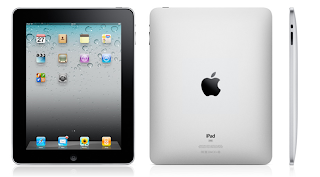
The launch of the iPad in 2010 was the most eagerly awaited launch of a digitial device, as Apple was revolutionising the market with a device that could converge different services into a mobile device. The fact that the iPad stores books, games, music and a range of devices allows the audience to be more pluralistic in terms of what they download and the features they can view. Though many critics have lablelled the iPad as" a giant iPhone", thus suggesting that the features are the same as those on the iPhone. Though, the iPad is exceptional, as the larger screen and display allows the audience to read newspapers such as 'The Guardian' and also allows audiences to access email , video , images and a host of features which would not be available on any other of Apple's devices.
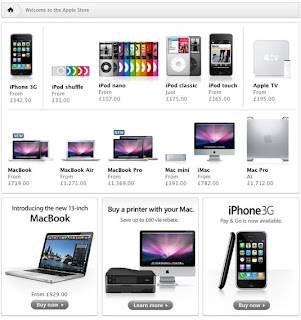
Notably, the Mac Apple app store's availability on the web allows consumers to select apps and preview them before they buy them. This service is more sophisticated , as the consumer can browse apps by category, such as games, or do a quick search for something specific. In accordance, the audience can also be recommended to buy specific Mac apps, by reading developer descriptions and user reviews. The web service for the app store allows audiences to be updated for the latest apps which are available and can flip through screenshots to preview its graphics, functions and quality.
Likewise, the app store on the iPod touch is similar with the Mac app store, as the audience can preview apps and can read reviews of apps which have been recommended by developers. Though, the itouch differs to the Mac, as the audience can watch trailers of specific apps , for example games such as Assasssin's Creed Altair's Chronicles. Like the iPhone, the audience can buy apps and be updated by Apple for the latest apps which are out . However, the iTouch's apps have to be brought through iTunes, which is another service provided by Apple, where the audience can purchse music, games and apps based around music, entertainment and work.
The iTunes store provides a base for music institutions to gain profits, as audiences have to pay for tracks or pay a fee for albums. In this way, Apple is helping music instituions , as the wave of piracy has damaged music institutions, as thier music can be downloaded illegally. What's more, iTunes also stores movies and television shows which can be downloaded and viewed at any time. The convergence offered on the Mac, itouch and iPad is more sophisticated, as the audience can preview apps and download games, movies or music from one device or a range.
The launch of the iPad in 2010 was the most eagerly awaited launch of a digitial device, as Apple was revolutionising the market with a device that could converge different services into a mobile device. The fact that the iPad stores books, games, music and a range of devices allows the audience to be more pluralistic in terms of what they download and the features they can view. Though many critics have lablelled the iPad as" a giant iPhone", thus suggesting that the features are the same as those on the iPhone. Though, the iPad is exceptional, as the larger screen and display allows the audience to read newspapers such as 'The Guardian' and also allows audiences to access email , video , images and a host of features which would not be available on any other of Apple's devices.


Wednesday, 9 February 2011
Is Murdoch's The Daily any good?
Within this specific article, the aesthetic qualities of the The Daily on the iPad have been scrutinised due to the fact that the usability and the experience of using the application just is not good.
The carousel navigation seemingly resembles the iTunes and seems quite easy to locate different articles. To an extent, the designers felt that was the simplest way to give a good overview of all the content, and subconsciously remind the user that this is an iTunes-style paid content environment – though you can't burn your existing digital publications and view them through the Daily. In addition, the application is hindered, due to the poor quality of the page images, which resemble JPGs that have been copied again and again.
As you progress through to one of the sections – news, opinion, sport, apps and games, arts and life and gossip, a progress bar appears which reinforces the feeling there is a different design feel for each content section and that these are almost separate magazines.
Stephen Fry beautifully articulated at the UK launch of the iPad, we are human beings and respond emotionally to things, not functionally. This suggests that people would gradually become used to using the iPad over time. Though the complexity of the functions may be too much for consumers
Many people and companies such as Mashable ( a social media group) feel that the Daily is "a second-rate magazine, not a newspaper". Therefore many consumers may feel that the iPad is not revolutionary in terms of its content, which could be similar to a print newspaper.
However, the Daily offers a more coherent alternative to traditional newspapers, as it contains news/sport/opinion, fashion, gossip, and tech on one newspaper and not four, like the Sunday Times. Therefore, the convergence of the news may give instant gratifications to the consumers, who have a choice to select which content to browse.
Though many critics have dismissed the Daily due its design flaws: "Maybe they've hired a good staff of writers and editors, but they sure need better designers and engineers. The experience just isn't good enough." The fact that a group of writers are working together makes the content more interesting and engaging, yet the aesthetics are seemingly poor for the iPad newspaper.
To an extent the Daily should not be harshly judged , as it offers a range of news, yet there is still some need for newsworthy material. "It's probably not fair to judge the app by its first edition, but there seems to be a lack of hard news and a strong focus on lifestyle stories . The fact that the Daily features a horoscope section is a clear example of its legacy sensibility.
"Also, the news part of the Daily isn't keeping up with recent developments. The story about Egypt, for example, is based on old information and the paper currently makes no mention of the violent clashes that happened in Cairo today." In effect the Daily has flaws with its updating of recent content, as the latest news is not shown , therefore being less reliable for consumers who may turn to other ways of getting their news, for example BBC News websites, pod casts etc.
We'd expect a decent amount of redesign, and it's only fair to see this as a technical beta version of the Daily. But the editorial proposition is a harder thing to refine, and defining what that offer is to potential customers – beyond existing free news and established brands – may turn out to be the Daily's biggest challenge. The hardest challenge for the Daily is to establish itself as a popular brand and to become the 'next big thing', as previously Murdoch failed with ventures into social networking, with MySpace and Aol, which were big money flops.
The carousel navigation seemingly resembles the iTunes and seems quite easy to locate different articles. To an extent, the designers felt that was the simplest way to give a good overview of all the content, and subconsciously remind the user that this is an iTunes-style paid content environment – though you can't burn your existing digital publications and view them through the Daily. In addition, the application is hindered, due to the poor quality of the page images, which resemble JPGs that have been copied again and again.
As you progress through to one of the sections – news, opinion, sport, apps and games, arts and life and gossip, a progress bar appears which reinforces the feeling there is a different design feel for each content section and that these are almost separate magazines.
Stephen Fry beautifully articulated at the UK launch of the iPad, we are human beings and respond emotionally to things, not functionally. This suggests that people would gradually become used to using the iPad over time. Though the complexity of the functions may be too much for consumers
Many people and companies such as Mashable ( a social media group) feel that the Daily is "a second-rate magazine, not a newspaper". Therefore many consumers may feel that the iPad is not revolutionary in terms of its content, which could be similar to a print newspaper.
However, the Daily offers a more coherent alternative to traditional newspapers, as it contains news/sport/opinion, fashion, gossip, and tech on one newspaper and not four, like the Sunday Times. Therefore, the convergence of the news may give instant gratifications to the consumers, who have a choice to select which content to browse.
Though many critics have dismissed the Daily due its design flaws: "Maybe they've hired a good staff of writers and editors, but they sure need better designers and engineers. The experience just isn't good enough." The fact that a group of writers are working together makes the content more interesting and engaging, yet the aesthetics are seemingly poor for the iPad newspaper.
To an extent the Daily should not be harshly judged , as it offers a range of news, yet there is still some need for newsworthy material. "It's probably not fair to judge the app by its first edition, but there seems to be a lack of hard news and a strong focus on lifestyle stories . The fact that the Daily features a horoscope section is a clear example of its legacy sensibility.
"Also, the news part of the Daily isn't keeping up with recent developments. The story about Egypt, for example, is based on old information and the paper currently makes no mention of the violent clashes that happened in Cairo today." In effect the Daily has flaws with its updating of recent content, as the latest news is not shown , therefore being less reliable for consumers who may turn to other ways of getting their news, for example BBC News websites, pod casts etc.
We'd expect a decent amount of redesign, and it's only fair to see this as a technical beta version of the Daily. But the editorial proposition is a harder thing to refine, and defining what that offer is to potential customers – beyond existing free news and established brands – may turn out to be the Daily's biggest challenge. The hardest challenge for the Daily is to establish itself as a popular brand and to become the 'next big thing', as previously Murdoch failed with ventures into social networking, with MySpace and Aol, which were big money flops.
Murdoch's iPad Daily Newspaper

This article looks at the eagerly anticipated launch of Rupert Murdoch's The Daily Newspaper which will be exclusive on the iPad and will include content from around 150 journalists from newspaper titles such as The New York Times, Dow Times and other News Corp titles. By launching the newspaper on a digital format, Murdoch is trying to 'revolutionise news coverage', in the way the Sun did for tabloid journalism in the 1970s and Fox News did for television in the last decade.
In addition, the fact that Murdoch has invested $30m in the venture suggests that he is trying to advance and be a market leader, as insiders in News Corp have labelled the product, "the future of journalism". The fact that content will be selected from elsewhere at News Corp, creates a powerful blend of popular titles such as Fox News, Wall Street Journal and the altogether more racy New York Post.
Rupert Murdoch described his latest venture as a "game changer" , though he also trying to charge consumers for online access – the Times has a paywall – and Apple's "make consumers pay" ecology is a perfect match for his product. By merging with Apple, News Corp will try to generate more profit and will cater for one device, which will hopefully avoid the need to produce content, say for a number of devices.
What is also unclear is how far the Daily will act as a "walled garden". Will it be easy to link to the external content referred to in the Daily's news items? And will it be possible to link into the Daily's content via an iPad? Significantly, no Daily content will be available on the open internet, thus greatly restricting the pool of potential consumers.
News Corp says it has no plans to bring the Daily to the UK, even though the company is in the process of bidding for BSkyB, and the logic of that purchase would be to create a similarly integrated Times/Sun/Sky News product. Doing so, though, would raise the hackles of competitors worried about News Corp's power, while in the US the company is simply one large player among several media conglomerates.
http://www.guardian.co.uk/media/blog/2011/feb/02/murdoch-ipad-daily-news-corp?INTCMP=SRCH
Rupert Murdoch's The Daily Newspaper on iPad

The Daily Newspaper is one of the first newspapers which will be launched exclusively on Apple's iPad and requires a subscritption fee in order to access the content. The paper itself will be 'will be offered at 99c for a weekly subscription or $40 for a year'. The fact that The Daily will be exclusive to the iPad enables no other website, partner print product or smartphone or rival tablet version to compete with the iPad.
The paper itself will include content from 100 journalists , but will also include additional material from journalists at the Atlantic, the New Yorker, AOL and the New York Times as well as News Corp titles the Wall Street Journal, New York Post and Dow Jones. News is being characterised as commuter-friendly, concise, sport, entertainment and gossip, immediately pitches it against free print titles as well as current customisable tools such as Instapaper.
Apple is expected to use the launch to announce a new system for in-app subscriptions. Publishers are likely to have to relinquish 30% of their subscription revenues to Apple in the same way that app developers do. In effect, this would mean that News Corp makes just 66c per weekly subscription. Murdoch has said he anticipates it will take 800,000 readers to make the Daily viable.
http://www.guardian.co.uk/media/pda/2011/feb/02/the-daily-murdoch-ipad-newspaper?INTCMP=SRCH
Tuesday, 8 February 2011
Steve Jobs and his anti porn campaign on the iPad
In this article from The Guardian, Steve Jobs, head of Apple is campaigning and vowed to make the iPad censored, as he feels that children can access it easily and can influence them in the wrong way.
Quotes from the article
Steve Jobs is hardly shy of a battle – and his latest target is pornography. He wants to keep it off Apple products.
"Many magazine publishers developing "apps" for the new iPad... have had to self-censor".
"... the iPad version is mockingly known as "the Iranian version", because of the amount of censorship required to get it approved for Apple's App Store".
"Germany's Stern magazine saw its app pulled because it runs topless photo spreads."
"You know, there's a porn store for Android [phones using Google's software]. You can download porn, your kids can download porn. That's a place we don't want to go – so we're not going to go there."
"It is not only porn that seems to trouble Apple. In the last few months, it has banned an app with political cartoons (by a Pulitzer-winning cartoonist – though it quickly relented), and a gay travel guide to New York (too much skin, and an unflattering caricature of Sarah Palin)".
"Apple points to section 3.3.17 of its developer agreement: "Materials . . . that in Apple's reasonable judgment may be found objectionable; [eg] materials that may be considered obscene, pornographic or defamatory."
"... given that the iPad includes a web browser, cannot help but let the monster of porn and donkey of defamation clatter in, no matter how hard you try to keep them out".
"I don't want 'freedom from porn'. Porn is just fine! And I think my wife would agree."
"You might care more about porn when you have kids . . ."
Apple controls exactly what appears on its App Store; to make that match the clean lines of its products and adverts, it needs to enforce a "clean" approach to content.
"Would an app of images of famous classical art nudes be acceptable? Will the big names be treated more leniently than the smaller ones? There was at least an outward appearance of a double standard involving Playboy and Sports Illustrated in the iPhone App Store when Apple's rules were tightened earlier in the year."
Phil Schiller, Apple's vice-president of marketing, made the rather weak claim earlier this year that the reason they were allowed – and others were banned – was that they came from "a well-known company with previously published material available broadly in a well-accepted format".
"... how well-known do you have to be, exactly, for Apple to decide your content is OK? To that, there isn't an answer. But Jobs might email one soon".
http://www.guardian.co.uk/technology/2010/may/25/ipad-porn-free-steve-jobs?INTCMP=SRCH

Quotes from the article
Steve Jobs is hardly shy of a battle – and his latest target is pornography. He wants to keep it off Apple products.
"Many magazine publishers developing "apps" for the new iPad... have had to self-censor".
"... the iPad version is mockingly known as "the Iranian version", because of the amount of censorship required to get it approved for Apple's App Store".
"Germany's Stern magazine saw its app pulled because it runs topless photo spreads."
"You know, there's a porn store for Android [phones using Google's software]. You can download porn, your kids can download porn. That's a place we don't want to go – so we're not going to go there."
"It is not only porn that seems to trouble Apple. In the last few months, it has banned an app with political cartoons (by a Pulitzer-winning cartoonist – though it quickly relented), and a gay travel guide to New York (too much skin, and an unflattering caricature of Sarah Palin)".
"Apple points to section 3.3.17 of its developer agreement: "Materials . . . that in Apple's reasonable judgment may be found objectionable; [eg] materials that may be considered obscene, pornographic or defamatory."
"... given that the iPad includes a web browser, cannot help but let the monster of porn and donkey of defamation clatter in, no matter how hard you try to keep them out".
"I don't want 'freedom from porn'. Porn is just fine! And I think my wife would agree."
"You might care more about porn when you have kids . . ."
Apple controls exactly what appears on its App Store; to make that match the clean lines of its products and adverts, it needs to enforce a "clean" approach to content.
"Would an app of images of famous classical art nudes be acceptable? Will the big names be treated more leniently than the smaller ones? There was at least an outward appearance of a double standard involving Playboy and Sports Illustrated in the iPhone App Store when Apple's rules were tightened earlier in the year."
Phil Schiller, Apple's vice-president of marketing, made the rather weak claim earlier this year that the reason they were allowed – and others were banned – was that they came from "a well-known company with previously published material available broadly in a well-accepted format".
"... how well-known do you have to be, exactly, for Apple to decide your content is OK? To that, there isn't an answer. But Jobs might email one soon".
http://www.guardian.co.uk/technology/2010/may/25/ipad-porn-free-steve-jobs?INTCMP=SRCH

Subscribe to:
Posts (Atom)